Hospitals
Hospital wristband colour codes: what each colour means
Updated 3 min read Paper Bands by Adalwin
No single colour code binds every Indian hospital. The most widely used scheme, adopted by many US hospital associations from 2008, is white for identification, red for allergy, yellow for fall risk and purple for do not resuscitate. Whichever scheme you use, write it into your policy and print the alert word on every band.
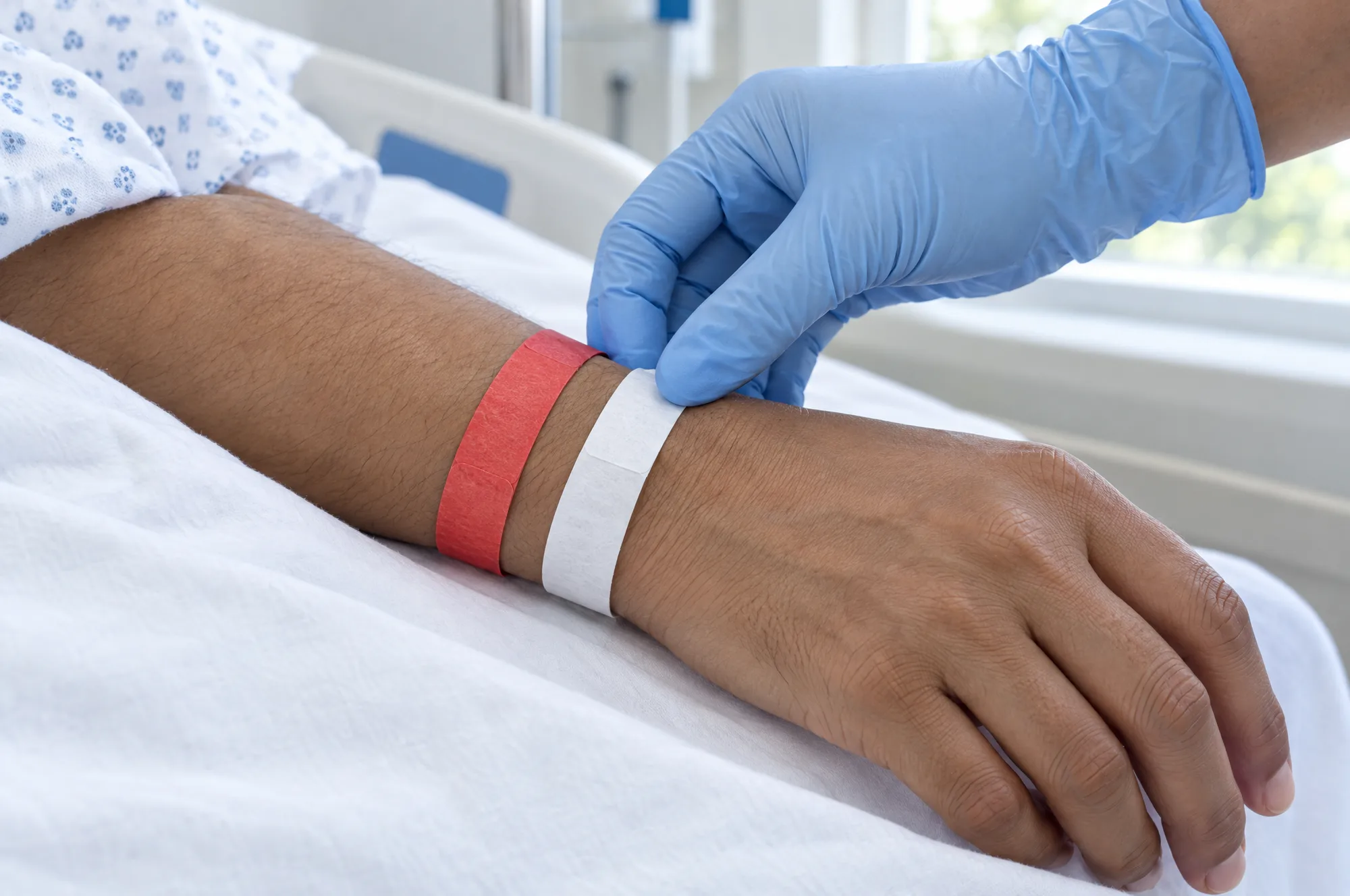
The most common scheme
| Colour | Meaning | Notes |
|---|---|---|
| White or clear | Patient identification | Name, hospital number and date of birth. Every patient wears one. |
| Red | Allergy | Worn as a second band, with the allergy written in the chart. |
| Yellow | Fall risk | Signals that the patient needs help to move. |
| Purple | Do not resuscitate | Some accreditors caution against DNR bands altogether; follow your own policy. |
| Green | Latex allergy | Used in some standards, such as Colorado’s. |
Recommended by the American Hospital Association in 2008 and adopted by state hospital associations including Wisconsin and Colorado. Other colours (pink for a restricted limb, orange for no blood products) appear in some hospitals but vary more.
Why a standard matters
The standards began with near-misses. In one reported case, a nurse who worked in two hospitals put a yellow band on a patient: in one hospital yellow meant do not resuscitate, in the other it meant something else entirely. Another clinician caught it. A 2006 survey of Colorado hospitals found five different colours in use for allergy, five for DNR and six for fall risk.
Staff move between hospitals, and patients are transferred. The fewer meanings a colour has across a city, the safer the band is.
What NABH says
We could not find a colour requirement in published NABH material. Identifying patients correctly is the first of the international patient safety goals, and it is part of what accreditation looks at. The colours themselves are your hospital’s decision. Confirm against the current edition of the NABH standards with your quality team before you change anything.
Five practices the standards agree on
- Print the word on the band. "ALLERGY" printed on a red band does not depend on colour vision or on the lighting in the ward.
- Remove charity and social-cause bands at admission. A coloured rubber bracelet from a fundraiser can be mistaken for an alert band. Remove it, or cover it if the patient refuses.
- Match the chart and the signage. Stickers on the file and signs at the bed use the same colours as the bands.
- Explain the bands to the family. Relatives notice a missing band before anyone else does.
- Keep few colours. Four or five alerts that everyone knows beat twelve that nobody remembers.
Ordering bands for a colour policy
Our patient ID bands in stock are white, adult size, in Tyvek-type write-on or vinyl with a snap closure. For alert bands, tell us the colours and words in your policy: our stock colours include red, yellow and purple, and we print the hospital name and the alert word from 5,000. See wristbands for hospitals and clinics.
Questions
What does a red wristband mean in a hospital?
In most hospitals that use colour alerts, red means the patient has an allergy. Check the chart for what the allergy is.
What does a yellow wristband mean in a hospital?
Usually fall risk: the patient should not walk without help.
What does a purple wristband mean?
In hospitals that follow the common scheme, do not resuscitate. Some hospitals do not use DNR bands at all.
Is there an NABH colour code for patient ID bands?
We could not find one in published NABH material. Hospitals set their own colours; confirm with the current NABH standards.
Sources
- Wisconsin Hospital Association, The Color of Safety: standardisation and implementation manual
- Colorado Hospital Association, Colorado alert wristband standardisation toolkit
- Texas Hospital Association, Color-coded wristband toolkit: Banding Together for Patient Safety
- Hospital Quality Institute, Ask CHPSO: do hospitals use colour-coded wristbands, and which colours?
Outside sources checked on 14 October 2026.